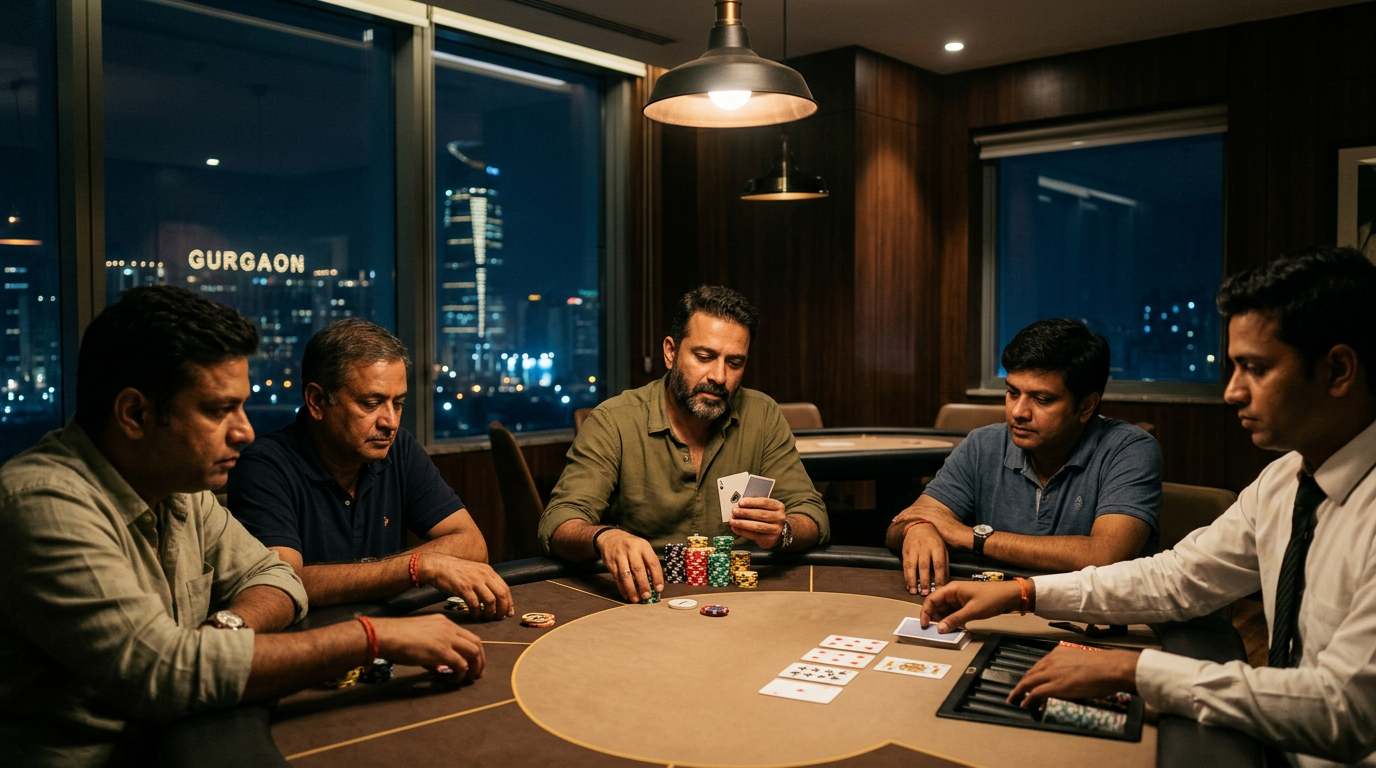

For enthusiasts of card games, the legal landscape surrounding poker in India can often feel like a high-stakes bluff. This is particularly true for those looking to play poker in Gurgaon, a bustling city in Haryana that is a major hub of activity in the Delhi NCR region. Understanding the nuances of Haryana's gaming laws is crucial for both players and organizers to ensure they operate within legal boundaries. This article aims to demystify these regulations, providing clarity for anyone involved in poker in this dynamic state.
The Public Gambling Act of 1867: The Foundation
The bedrock of gambling legislation in India is the Public Gambling Act of 1867. This archaic law, predating modern card games like poker, broadly prohibits ‘gaming’ in public places and the running of common gaming houses. However, it also contains a crucial exception: games of 'mere skill' are exempt from its prohibitions. The interpretation of what constitutes a 'game of skill' versus a 'game of chance' has been the subject of numerous legal battles and varying judgments across different states.

"The distinction between games of skill and games of chance is pivotal in Indian gaming jurisprudence. While games of chance are generally prohibited, games predominantly relying on skill are often permitted."
Poker: A Game of Skill?
The legal status of poker as a game of skill has been affirmed by several high courts in India. The Karnataka High Court, for instance, has explicitly recognized poker as a game of skill. While there isn't a specific, overarching central law declaring poker as a game of skill nationwide, these state-level pronouncements and judicial interpretations provide a strong legal basis. For players interested in poker in Gurgaon, this distinction is paramount. If poker is indeed a game of skill, then the Public Gambling Act of 1867, as adopted by Haryana, would not apply to it, potentially legitimizing its play under certain conditions.
Arguments for poker being a game of skill typically highlight elements such as:
- Strategic Decision-Making: Players make complex decisions based on probabilities, opponent psychology, and chip stacks.
- Mathematical Calculations: Understanding pot odds, implied odds, and equity are fundamental.
- Observational Skills: Reading opponents, identifying patterns, and detecting bluffs are critical.
- Bankroll Management: Disciplined financial management is essential for long-term success.
- Long-Term Performance: Skilled players consistently outperform unskilled players over a large sample size of hands.
Haryana's Specific Stance on Gaming
Haryana, like many other Indian states, has adopted the Public Gambling Act of 1867. Currently, Haryana does not have specific, modern legislation that explicitly regulates or liberalizes poker. This means that the general prohibitions of the 1867 Act, coupled with its 'game of skill' exception, form the legal framework. Therefore, for those playing or organizing poker in Gurgaon, the key legal question revolves around whether their specific activity falls under the 'game of skill' exemption. It's important to note that even if poker is considered a game of skill, organizing it for profit in a public common gaming house could still face legal scrutiny under the 'common gaming house' provisions of the Act, which target the proprietors, not necessarily the players of skill games.
Operating a 'gaming house' where the house takes a rake or charges an entry fee might be interpreted as facilitating common gaming, even if the game itself is one of skill. This is a critical grey area that organizers of live poker in Gurgaon events or clubs must navigate carefully. While playing poker online for stakes has generally been afforded more protection under the 'game of skill' umbrella due to various judgments, the physical operation of poker rooms remains a more complex issue.
Online vs. Offline Poker in Gurgaon
The distinction between online and offline poker is significant. Online poker platforms, predominantly operating with payment gateways and digital transactions, have largely been able to argue the 'game of skill' exemption more successfully, especially considering platforms don't typically constitute a 'common gaming house' in the traditional sense. Many such platforms have received favorable judgments from various High Courts, asserting their legality.
Offline poker, as mentioned, presents more challenges. While playing a friendly game of poker for small stakes at home among friends is unlikely to attract legal attention, organizing regular tournaments or cash games in a commercial establishment where the house profits is a different matter. Such establishments could be deemed 'common gaming houses' under the Public Gambling Act, making their operation illegal even if the game is one of skill.
The Path Forward for Poker in Gurgaon
Given the current legal landscape, individuals and businesses involved in poker in Gurgaon should exercise caution. A definitive and modern law from the Haryana state government would provide much-needed clarity, akin to the positive regulations seen in states like Nagaland and Sikkim which issue licenses for online skill gaming. Until such legislation is enacted, the legal status remains somewhat ambiguous, relying heavily on judicial interpretation and precedents.
Players should be aware of the environment they are playing in. If participating in an organized game, understanding the legal standing of the organizer is crucial. For organizers, consulting legal experts specializing in gaming laws is highly advisable to ensure compliance and mitigate risks. The industry continues to advocate for clear regulatory frameworks that distinguish skill games from games of chance, promoting a safe and regulated environment for games like poker.
The journey to fully legalize and regulate poker across all of India, including for poker in Gurgaon, is ongoing. As judicial interpretations evolve and states consider modernizing their gaming laws, the future of poker appears promising, but navigating the present legal framework requires diligence and awareness.
Frequently Asked Questions
Q1: Is playing poker for money legal in Gurgaon, Haryana?
A1: The legality of playing poker for money in Gurgaon depends on whether it's classified as a 'game of skill' or a 'game of chance' under Haryana's adopted Public Gambling Act of 1867. High Courts in other states have ruled poker as a game of skill, which would exempt it from the Act's prohibitions. However, operating a commercial 'gaming house' for profit, even for skill games, can still be problematic.
Q2: Can I organize a poker tournament in Gurgaon?
A2: Organizing a poker tournament in Gurgaon, especially where the organizer takes a rake or entry fee, carries legal risks. Such an establishment could be interpreted as a 'common gaming house' under the Public Gambling Act, even if poker is considered a game of skill. It is strongly advised to seek legal counsel before organizing any commercial poker events.
Q3: What's the difference in legality between online and offline poker in Haryana?
A3: Online poker platforms generally have a stronger legal standing due to various court rulings affirming poker as a game of skill and the challenges in classifying an online platform as a 'common gaming house' in the traditional sense. Offline poker in commercial establishments faces more scrutiny under the 'common gaming house' provisions of the Public Gambling Act, making its legality more tenuous in Haryana without specific state legislation.