10 Common Poker Mistakes Beginners Make (and How to Fix Them)
A practical guide to the leaks that cost new poker players chips, with simple fixes for pre-flop, post-flop and bankroll decisions.
Rishi Published 17 November 2026 10 min read
Share
On this page
The short answer
The most expensive poker mistakes beginners make are usually simple ones: playing too many hands, ignoring position, calling without a clear reason, misreading pot odds and allowing short-term results to change sensible decisions. You get better by tightening your starting range, thinking in ranges rather than single hands, sizing bets deliberately and reviewing difficult spots after the session.
Poker can feel complicated because several decisions arrive at once. You are watching your cards, the board, stack sizes, opponents and the action while trying to remember what happened one street earlier. Beginners often respond by relying on instinct. A better method is to simplify each decision. Ask where you are seated relative to the button, what hands reasonably fit the previous action, what price you are being offered and what your bet or call is supposed to achieve.
This guide focuses mainly on no-limit Texas Hold'em concepts, but much of the thinking applies more broadly. None of the fixes guarantees a profit. Cards still contain short-term variance, and strong decisions can lose individual pots. The useful measure is whether you repeatedly make decisions that are mathematically and strategically defensible.
Poker mistakes 1-2: playing too many hands and ignoring position
Mistake 1: entering too many pots. Beginners see two suited cards, a connected hand such as 8-7, or a face card and feel they have been given something worth playing. That creates a basic leak: weak starting hands frequently make weak pairs, dominated top pairs and draws that cost more chips before they improve.
The fix is not to memorise an enormous chart on day one. Start with a simple filter. From early position, play a tighter selection because several players still have the opportunity to act. As your position improves, you can consider more hands because you have more information about what others have done. When somebody has already raised, tighten again unless your hand and the situation justify continuing.
Mistake 2: treating every seat alike. Position changes the value of information. Acting later after the flop lets you see checks, bets and raises before making your own decision. A marginal hand that is awkward from early position may therefore become more playable near the button.
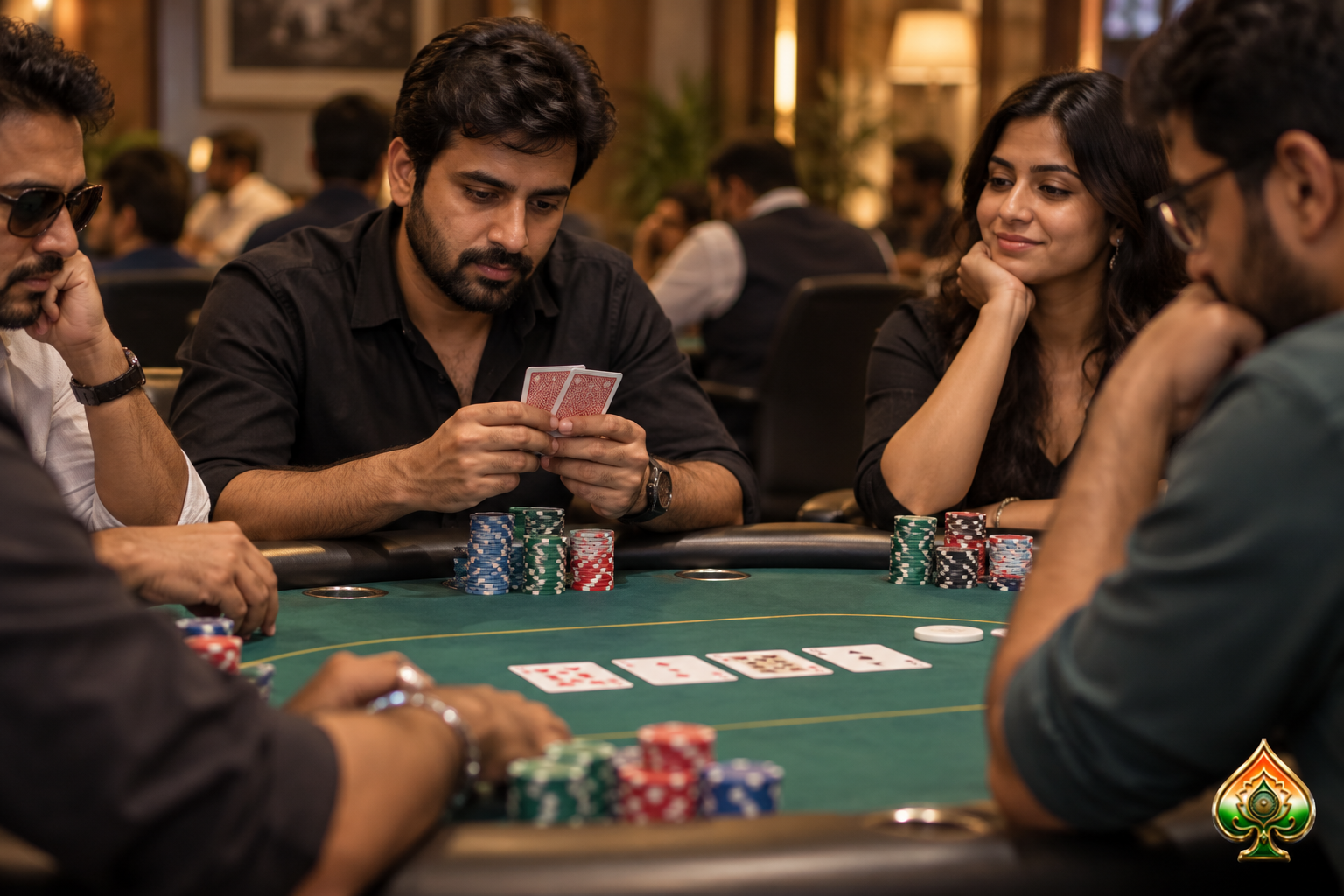
Try this routine before looking for reasons to play: identify your position, note whether the pot is unopened or raised, check the effective stack and then classify your hand. Do not reverse the process by becoming attached to attractive-looking cards first. In an Indian home game or card-room session, conversation can move quickly around the table; make a habit of locating the dealer button at the start of every hand. If you want live practice, you can find a poker club and check the operator's current details directly before visiting.
Position and starting-hand selection are two of the first leaks new players should address.
Poker mistakes 3-4: calling automatically and betting without a purpose
Mistake 3: calling because folding feels weak. A call is not a neutral choice. It puts chips at risk and needs its own justification. Suppose the pot is 600 chips and an opponent bets 300. Calling 300 gives you the chance to contest a final pot of 1,200 chips before any later action, so your immediate break-even equity is 300 divided by 1,200, or 25%. That does not automatically mean you should call whenever you think you have 25% equity; future betting, position and whether your estimated outs are genuinely clean can change the decision.
Build a three-option habit. When action reaches you, consider fold, call and raise rather than mentally defaulting to call. Ask what worse hands could continue against a raise, what better hands might fold, and whether calling leaves you with a sensible plan on the next street.
Mistake 4: betting merely because nobody else has. A bet should normally have a reason. A value bet aims to be called by worse hands. A bluff aims to make better hands fold. Some bets can achieve a mixture of objectives, but “I didn't know what else to do” is not one of them.
Consider holding A-K on an A-8-3 board against one opponent. Betting may extract value from weaker aces or other holdings that continue. Now compare a river where the board and previous action make it difficult to identify any worse hand that calls. Firing automatically can turn a good hand into an unnecessary loss. Before moving chips forward, complete the sentence: “I am betting because…” If the answer is unclear, reconsider.
Poker mistakes 5-6: chasing draws at any price and counting outs badly
Mistake 5: chasing every draw. Four cards to a flush or an open-ended straight can look powerful, but a draw is not automatically worth pursuing. The price matters. Pot odds compare the amount required to call with the pot you can win. In the earlier 600-chip pot facing a 300-chip bet, the immediate threshold was 25%. Facing a much larger bet into the same original pot would require substantially more equity.
A common beginner shortcut is “I might hit, so I call.” Replace it with four steps: count likely outs, estimate the chance of improving, compare that chance with the price, then account for complications such as future action or an opponent holding a stronger draw. With one card to come, each clean out represents roughly a little over 2% chance of arriving; with two cards to come, the familiar quick estimate of multiplying outs by about four gives a rough guide rather than an exact calculation.
Mistake 6: assuming every apparent out is clean. Suppose you need a heart to complete a flush. Not every heart necessarily guarantees the best hand if the board can pair, a higher flush is possible or the opponent's range contains stronger made hands. Likewise, making a straight can be dangerous when the board supports a higher straight.
This distinction matters because raw outs can exaggerate your real equity. During play, classify outs as clean, questionable or clearly unsafe. You do not need perfect calculation at the table. Conservative counting is usually more useful than confidently assigning yourself every card that appears to improve your hand.
Poker mistakes 7-8: putting opponents on one hand and sizing bets randomly
Mistake 7: deciding that an opponent “has exactly queens” and never updating the read. Poker decisions work better when you think in ranges. A player who raises before the flop could hold several pairs, strong aces, broadway combinations and, depending on position and tendencies, other hands. Subsequent actions narrow that collection.
Take a board of K-9-4. If the pre-flop raiser bets, do not ask only, “Do they have a king?” Ask which stronger hands, weaker made hands, draws and bluffs could reasonably take the same line. If that player then makes a large river bet after the board changes, reassess the range using all the action. Reads are hypotheses, not verdicts.
Mistake 8: choosing bet size by mood. Beginners often bet tiny when uncertain and very large when excited by a strong hand. Apart from making strategy inconsistent, obvious sizing patterns can reveal information to attentive opponents.
Instead, relate sizing to the pot, board and objective. On a dry board with few plausible draws, a smaller size may sometimes accomplish what you need. On a coordinated board containing several straight or flush possibilities, stronger made hands may have reasons to use a larger size against hands that can continue. There is no universal percentage that solves every spot.
Keep your physical process consistent too. Decide the size before reaching for chips, announce actions clearly where the game procedure calls for it, and follow the house rules. This reduces accidental information and avoids making strategy decisions halfway through placing a bet.
Poker mistakes 9-10: judging decisions by results and losing bankroll discipline
Mistake 9: assuming a winning hand was played well, or a losing hand badly. Results can mislead. Imagine getting all the chips in while holding a strong favourite, only for an opponent to improve on the river. The loss does not retrospectively make the earlier decision poor. The reverse is equally useful: making an unjustified call and catching the one card you wanted does not turn that call into sound strategy.
Review the decision using information available at the time. What range did the opponent plausibly have? What price did you receive? What alternatives were available? Would you make the same choice if you could repeat the situation many times without knowing the next card? That last question is an effective antidote to being results-oriented.
Mistake 10: playing with money you cannot comfortably lose, or trying to recover a loss quickly. Bankroll discipline does not make poker risk-free. Its purpose is to separate poker money from essential spending and to keep normal variance from dictating personal finances. The appropriate amount is personal. Losing ₹1,000 can be immaterial to one budget and significant to another, so copying somebody else's limit is not sensible.
Set a session budget before playing and do not increase it merely because you are behind. Never use money allocated to rent, bills, debt repayments or other necessities. Fatigue and frustration matter too: a pre-set stopping rule based on time or decision quality can be more useful than staying until losses are recovered. If poker stops being affordable or controlled entertainment, stopping is the correct financial decision.
How to get better at poker without making study complicated
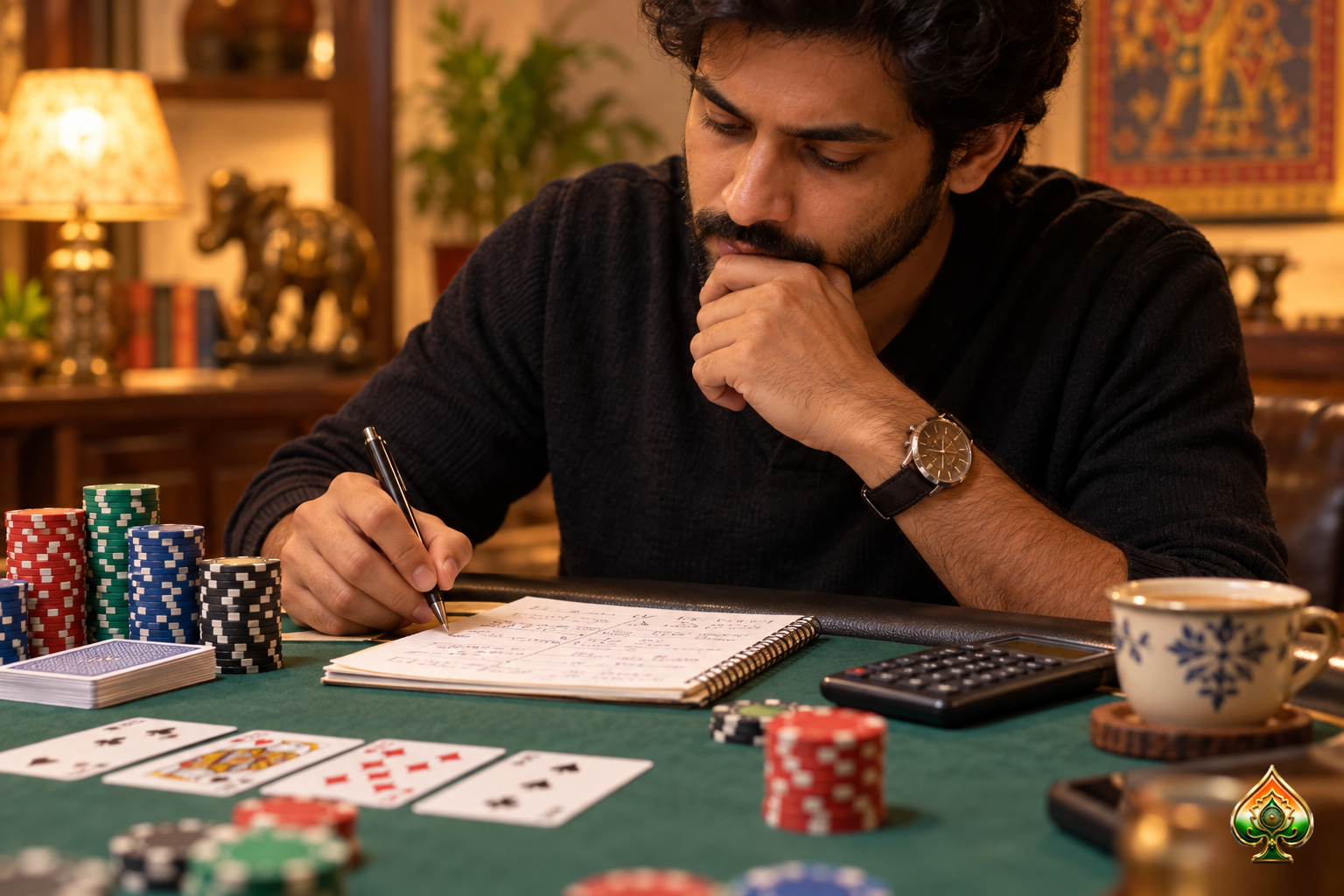
Improvement comes faster when review is specific. “Play better next time” tells you almost nothing. After a session, write down three to five hands that produced genuine uncertainty. Record positions, approximate stack sizes in chips, pre-flop action, board cards, bet sizes and what you were thinking. Do this before memory starts rewriting the hand around its result.
Then review each decision street by street. First ask whether the starting hand made sense for your position and the action before you. Second, build a plausible opponent range rather than using the cards eventually revealed. Third, calculate basic pot odds for significant calls. Fourth, identify the purpose of each bet. Finally, ask what you would do against different sizes or different turn and river cards.
One useful practice exercise is to remove the result entirely. Stop the hand history immediately before the difficult decision and work from only the information you possessed then. If you know the opponent later showed a bluff, it becomes remarkably easy to convince yourself that a marginal river call was obvious.
Good poker tips also become more useful when studied one theme at a time. Spend a session concentrating on position rather than trying to fix ten leaks simultaneously. On another day, track every significant call and note its pot odds. Later, study bet sizing. This produces measurable habits instead of a collection of slogans.
If you play in person, check the venue's rules and procedures directly because game formats and house practices can differ. Questions about legality depend on location and circumstances; PokerHub India's our state-by-state legal guide is the appropriate starting point for legal information rather than assumptions made from general poker strategy.
Recording uncertain hands makes post-session review more useful than judging decisions by results alone.
Frequently asked questions
What is the most common poker mistake beginners make?
Playing too many starting hands is one of the most useful beginner leaks to fix because it creates difficult problems on later streets. Weak hands often make second-best pairs or vulnerable draws. Start tighter, especially in early position, and expand selectively as you gain position and experience.
How can a beginner get better at poker quickly?
Focus on decision quality rather than short-term winnings. Learn position, starting-hand selection, pot odds and basic range thinking first. Save uncertain hands after each session and review exactly what information was available when the decision was made. Fixing one repeated leak is more productive than collecting dozens of disconnected poker tips.
Should beginners bluff often?
No fixed bluffing frequency suits every situation. A bluff needs a credible reason to expect better hands to fold. Consider the opponent's likely range, board texture, previous action and your own plausible value hands. Against players who call very widely, straightforward value betting may often be more useful than forcing elaborate bluffs.
How do pot odds help prevent poker mistakes?
Pot odds tell you the immediate price of a call. Divide the call amount by the final pot after your call, then compare that percentage with your estimated equity. The calculation is only part of the decision because future bets, position, ranges and whether your outs are clean can also matter.
Is poker strategy enough to guarantee winnings?
No. Poker contains variance, so good decisions can lose and poor decisions can win individual hands or sessions. Strategy aims to improve the quality of repeated decisions, not guarantee a financial result. Keep poker spending separate from essential money and avoid chasing losses.
From the high-stakes drama of Multi-Table Tournaments (MTTs) to the steady grind of cash games, we break down which format best suits your bankroll and style.
A practical Indian guide to separating poker funds, choosing buy-in limits, handling downswings and protecting a bankroll in cash games and tournaments.