Running a poker club is about more than cards, chips, and tables. It also means following the law, keeping clear records, protecting players, and meeting local rules.
India does not have one simple set of rules for every physical poker club. The law can differ from one state to another. A club that meets the rules in one state may face different conditions in another.
This makes legal compliance a key part of running a poker venue. Operators need to know which laws apply, what permissions they need, and how to keep their operations in order.
This guide explains the main legal checks that poker club operators should know before opening or running a venue in India.
1. Understand the Laws in Your State
The first step is to check the law that applies to your location.
Poker laws in India can depend on state legislation, court decisions, government notifications, and the way a game is run. The rules may also differ for physical clubs and online gaming services.
Do not assume that poker is legal in every state just because it involves skill. The legal status of a game does not always give a club automatic permission to operate.
Before opening a venue, operators should:
Check the current state gambling and gaming laws.
Review relevant court judgments and government notifications.
Confirm whether the club needs registration or other permission.
Check rules on membership, fees, and game operations.
Speak to a lawyer who understands gaming laws in that state.
These steps can help operators avoid costly mistakes. They can also help them understand which rules apply to their specific business.
2. Check Registration and Permission Requirements
A poker club may need to meet local business and gaming requirements before it can open. The exact process depends on the state and the type of venue.
Business registration alone does not always mean that a club has permission to run poker games. Operators should check whether separate approval, registration, or other conditions apply.
For example, Haryana introduced a specific framework for poker and rummy in September 2026. The state notified these games as games of skill under its 2025 law. Related operating conditions have also been reported.
This does not mean the same rules apply across India. Operators must check the current official documents for their own location.
Before opening, prepare a checklist that covers:
Business and entity registration.
Any required gaming or venue permission.
Local trade or premises requirements.
Tax registration, where applicable.
Fire safety and other building rules, where required.
Records that show compliance with applicable conditions.
Keep copies of all relevant documents. Review them when the law changes or the business changes its services.
3. Follow Player Identity and Age Checks
Player verification is an important part of responsible venue management. It helps a club confirm who is entering the premises and whether the person meets the legal age requirement.
Some legal frameworks may require formal identity checks. Other requirements can depend on the state, the venue's permissions, or a court order.
Haryana's recent poker framework has included player verification and traceability conditions. Operators should review the applicable official guidelines before deciding which checks they must follow.
A practical verification process may include:
Checking a player's identity.
Confirming that the player meets the required age.
Keeping records where the law requires them.
Preventing unauthorised access to restricted areas.
Protecting personal information from misuse.
Do not collect more personal data than necessary. Store records securely and limit access to authorised staff.
If identity documents are required, tell players why the information is needed and how it will be handled. Follow applicable data protection and record-keeping rules.
4. Keep Clear Financial and Tax Records
Financial records are another key part of poker club compliance.
Operators should keep clear records of business income, expenses, membership charges, food and beverage sales, staff payments, and other transactions. These records help with accounting and tax reporting.
The correct tax treatment depends on the nature of each transaction and the laws that apply. A membership fee, a service charge, a tournament entry fee, and money used as a stake may not receive the same treatment.
For this reason, operators should not rely on assumptions or copy another club's accounting method.
A sound financial process should include:
Accurate transaction records.
Separate business and personal accounts.
Proper invoices and receipts.
Regular accounting reviews.
Timely tax returns and payments.
Advice from a qualified tax professional.
The Supreme Court's May 2026 decision on GST in the online gaming sector has made tax advice especially important for businesses connected with gaming. However, operators must assess the ruling and relevant tax provisions in the context of their own activities.
Good records make it easier to answer questions from tax authorities and identify errors early.
5. Understand Rules on Fees, Rake, and Game Operations
Poker clubs need to understand how the law treats the money they collect.
Some venues may charge membership fees or provide food and other services. Rules on taking a rake, commission, or a share of the stakes can be different and may be subject to specific legal conditions.
A club should never assume that charging a fee is allowed simply because another venue does it.
Before setting prices or collecting payments, operators should confirm:
Which fees are allowed under the applicable rules.
Whether a rake or commission is prohibited.
How tournament entry fees must be handled.
Whether prize structures face specific restrictions.
How all charges should be recorded and disclosed.
For example, reported Haryana guidelines include restrictions on operators taking a rake or a share of the stakes. Clubs operating there should check the original guidelines and obtain legal advice before setting their fee structure.
Clear pricing also helps players understand what they are paying for. Avoid hidden charges or misleading claims about games, prizes, or potential returns.
6. Maintain a Safe and Well-Managed Venue
Legal compliance is not limited to the game itself. The venue must also meet the rules that apply to its premises and daily operations.
Depending on the location and business model, these may include fire safety, building use, staff requirements, and local business conditions.
Some poker club permissions or court orders may also require CCTV coverage and access to records for authorised officials.
Operators should check the exact conditions that apply to them. They should not assume that CCTV or any other single measure makes a venue legally compliant.
A practical venue checklist includes:
Keeping the premises clean and safe.
Maintaining required safety equipment.
Training staff on venue procedures.
Keeping business documents available for inspection where required.
Maintaining CCTV and records if the law or permission requires them.
Reporting and handling incidents through proper channels.
Regular internal checks can help identify problems before they become serious.
7. Treat Online Poker and Physical Clubs Separately
A physical poker club and an online poker platform do not necessarily follow the same legal framework.
A venue that hosts players in person must assess the state laws and local conditions that apply to its premises. An online service must also consider the central laws and rules that govern online gaming.
The Promotion and Regulation of Online Gaming Act, 2025, and the related 2026 Rules form part of the current framework for online gaming. Their scope should not be confused with the rules for a physical poker venue.
Operators should seek legal advice if their business combines a physical club with an online platform, app, or other gaming service.
They should also avoid using online gaming licences or registrations as proof that a physical venue has the required permissions.
The safest approach is to assess each activity separately and confirm the current legal position before launching it.
8. Help Players Find Reliable Poker Clubs
Compliance also matters to players who are looking for a venue.
People searching for poker rooms near me may want to know whether a club is open, what games it offers, and what requirements apply before visiting. They should not have to rely only on promotional claims.
Players can check a venue's official contact details, membership rules, age requirements, and current operating status. They can also ask about applicable permissions and the club's policies before taking part.
PokerHubIndia helps readers discover information about poker venues and the wider Indian poker scene. Listings can help players research their options, but a listing alone should not be treated as legal certification.
For example, someone researching the kings and queens poker club should verify the venue's current location, contact information, game availability, and applicable requirements directly before visiting.
Venue details can change. Players should confirm the latest information instead of relying on an old listing or an unverified online post.
9. Build a Regular Compliance Review Process
Poker laws and operating conditions can change. A club that was compliant when it opened may need to update its procedures later.
Operators should review their legal position on a regular basis. They should also review it whenever a new law, government notification, court judgment, or tax rule may affect their business.
A simple review process can help:
Check official government notifications and relevant court decisions.
Review current registration and permission documents.
Confirm that staff follow the required procedures.
Check financial, tax, and player records.
Fix any gaps with advice from qualified professionals.
Keep a record of the review and any action taken.
This process can reduce confusion and help a business respond to changes in a timely way.
Frequently Asked Questions
Are poker clubs legal in India?
There is no single answer for every state. The legal position depends on the applicable laws, court decisions, government notifications, and the way the club operates. Operators should obtain state-specific legal advice.
Does a poker club need registration?
It may need business registration, venue permissions, or specific gaming-related approval. The requirements depend on the location and business model. Operators should check the relevant official rules before opening.
Can a poker club charge a rake?
The answer depends on the applicable legal framework and any conditions attached to the venue's operation. Some frameworks restrict rake or commission. Clubs should confirm the current rules before collecting any share of the stakes.
Are online poker and physical poker clubs governed by the same rules?
No assumption should be made that the same rules apply to both. Physical venues and online gaming services can fall under different legal requirements. Each activity needs a separate review.
How can players check a poker club before visiting?
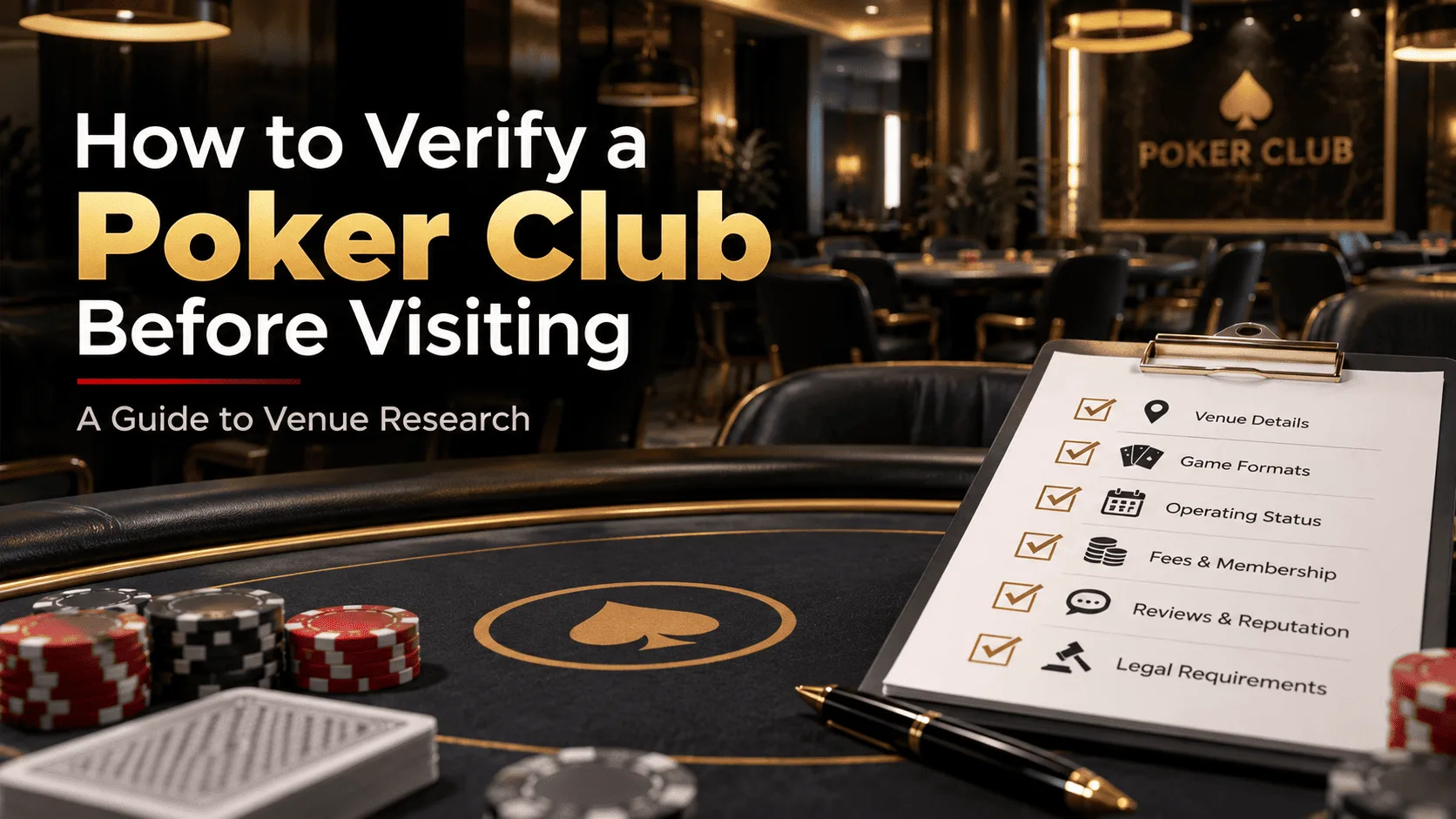
Players can confirm the venue's address, contact details, opening status, membership conditions, and game availability. They can also ask the operator about relevant permissions and house rules.
Final Thoughts
Running a poker club in India requires more than a good venue and an organised game. Operators need to understand local laws, meet applicable conditions, keep accurate records, and protect player information.
The rules can vary by state, so a general guide cannot replace legal advice for a specific club. Checking official documents and reviewing the rules regularly can help operators make better decisions.
For players, checking venue details before visiting is just as important. PokerHub India aims to make it easier to explore poker clubs and find useful information about India's live poker scene.